
Brussels Aerospace Group brings industry and consulting closer together
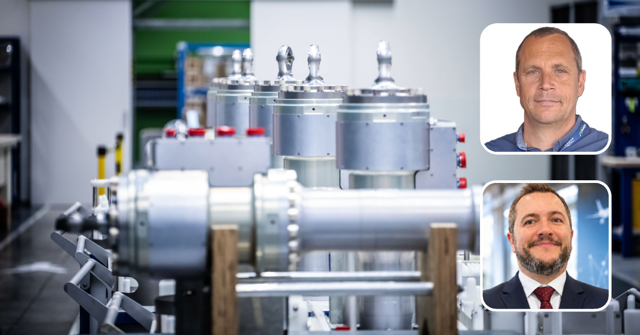
A joint perspective from Tillo Vanthuyne (BAG/SABCA) and Mathieu Herouard (BAG/Akkodis Belgium) on collaboration between industry and consulting.
What do you see as the main challenges facing the aerospace and defence sector today?
Tillo — One of the key challenges facing the sector is undoubtedly the availability of skills that match industry needs. To address this challenge, I see three possible courses of action: identifying the right skills on the market, investing in employee training, or working with consulting firms to strengthen our teams with additional expertise.
Mathieu — I agree with Tillo on this point. The issue is not always a shortage of resources, but rather a mismatch between the skills available and the needs of industry.
In this context, the value of a partner like Akkodis goes beyond simply providing consultants. Its real value lies in its ability to quickly mobilise the right expertise to address a specific industrial need.
“To access new markets, accelerate transformation or meet their clients’ specific needs, industrial companies can rely on consulting firms not only to strengthen their teams, but also to manage specific projects and mobilise the expertise required to deliver them.”— Mathieu Herouard
Tillo — The industry is evolving rapidly! Among the major trends currently transforming the sector, I would highlight the accelerated transition from prototype to production, the far-reaching changes in supply chain, the growing integration of artificial intelligence, and the digitalisation of factories and production facilities as part of Industry 4.0.
In which situations do you need to call on external expertise, and what do you expect from a consulting firm in practical terms?
Tillo — An industrial company must first and foremost focus on its core business. When the required skills are available in-house, it makes sense to draw on them. When a specific area of expertise is missing, that is where an external partner can make a real difference.
Let’s take a very concrete example: setting up a new production line. This type of project does not necessarily fall within a company’s day-to-day industrial operations. A consulting firm can provide the expertise, experience and methodology needed to ensure its success.
The same applies to artificial intelligence and Industry 4.0, which we mentioned earlier. Some technologies have become essential to the industrial sector, yet they do not necessarily fall within a company’s core areas of expertise. In such cases, it is crucial to rely on external partners who can guide us, provide specialised expertise and, above all, turn these emerging technologies into practical solutions tailored to our challenges and operational realities.
Mathieu — Working with an external partner can address both short-term needs and broader strategic objectives: entering a new market, conducting benchmarking, analysing an industry’s competitive positioning, developing a new methodology or supporting an industrial transformation.
In these situations, our role is first to understand the client’s challenges and objectives, then work with them to determine the best approach. This may involve bringing specific expertise into the client’s existing teams, but it can also mean setting up a dedicated project team to take ownership of a clearly defined scope, from design through to implementation.
An external perspective can bring significant added value, particularly by helping industrial companies take a step back, benchmark their practices against those of the wider market and, above all, turn insights into concrete action.
“We don’t simply expect a consulting firm to bring us knowledge. Above all, we expect it to understand our business, our challenges and to provide expertise that we don’t have in-house. Turning to a consulting firm is not just about finding extra manpower; it’s about accessing the right skills!”— Tillo Vanthuyne
In many cases, the consultant’s role begins even before the assignment itself gets underway.
“The first step is to gain a clear understanding of the problem the company is facing and to define it precisely. Identifying the problem clearly is already a mission in itself!”— Tillo Vanthuyne
In your opinion, what added value does a consultant bring when working with an industrial company?
Mathieu — Our added value lies in our ability to combine industry-specific expertise, delivery capabilities and flexibility.
We can step in to temporarily strengthen a team, but we can also support or take ownership of a project with a clearly defined objective: improving an industrial process, developing a new system architecture, digitalising a process, supporting production ramp-up, optimising a supply chain or deploying a new technology.
The key is not to view resources as an end in themselves. Skills are a means to an end; the project outcome is what ultimately matters.
This approach also gives companies greater flexibility. They can quickly access expertise that they may not necessarily wish to develop in-house or recruit for a project with a fixed duration.
Drawing on experience across different industries, consultants can also make recommendations on products, transformation strategies and market positioning.
To give a concrete example, without naming the company, Akkodis is conducting an audit of the systems department of a defence-sector company. As part of this assignment, we are analysing existing working methodologies and system architecture, then making recommendations to help the company develop a more modular product architecture that is better suited to the evolving needs of its market.
But our role does not stop at the diagnostic stage. Value also lies in our ability to support the implementation of recommendations and turn them into tangible operational results. Our ultimate goal is to help our clients become more competitive in their markets!
What does each of your two worlds bring to the other?
Tillo — Working in industry allows consultants to develop a practical, hands-on understanding of the field and acquire new skills. The relationship works both ways: industry benefits from consultants’ expertise, enabling companies to enhance their own practices and capabilities.
“The relationship between industry and consulting is truly a win-win.”— Tillo Vanthuyne
Mathieu — Being close to industry is essential to understanding operational constraints, business challenges and the realities on the ground.
Working with different companies and across a variety of projects also enables us to bring a cross-industry perspective. We can identify practices that have proved successful elsewhere, suggest new approaches and accelerate the implementation of solutions.
In your view, what does it take to move from a traditional client–supplier relationship to a genuine long-term partnership?
Tillo — It is crucial for a consultant to take the time to understand the industry and its environment, including the factory floor and the different roles and activities involved. A consultant should not limit themselves to making general recommendations in a report or presentation.
For an industrial company, the success of a consulting assignment is measured above all by what has been implemented and the results achieved. It is also essential that knowledge and expertise are gradually transferred to the in-house teams.
Mathieu — As an external partner, I would emphasise the importance of transparency, as well as the ability to build a relationship focused on results.
For a collaboration to develop into a genuine partnership, both parties need to share a clear understanding of the objectives, challenges, responsibilities and expected outcomes.
This also means being able to propose the right engagement model for each specific need: specialised expertise for a one-off assignment, team reinforcement, a dedicated project team, workstream management or comprehensive support for a wider transformation.
You are both members of the Brussels Aerospace Group (BAG). What role can the cluster play in fostering collaboration between industry and consulting firms?
Tillo — BAG primarily acts as a facilitator, connecting stakeholders who do not always have the opportunity to work together. It helps industrial companies gain a better understanding of consultants’ skills, expertise and innovation capabilities, while enabling consultants to gain a deeper insight into the realities and operational needs of industry.
This openness extends beyond consulting firms. Research centres, universities and colleges also possess highly specialised expertise that can address specific industrial challenges. These organisations are valuable partners for industry, and some are already BAG members!
“To conclude, I would say that BAG creates an ecosystem where stakeholders can identify their complementary strengths, share their expertise and more easily build collaborations around specific technical or industrial challenges.”— Tillo Vanthuyne
Mathieu — BAG can play an important role in bringing these stakeholders together. It helps us better understand the concrete challenges faced by industrial companies while raising the visibility of consulting firms’ expertise and delivery capabilities.
For me, the value of the cluster lies precisely in its ability to foster collaborations that go beyond simply providing additional resources. It can help bring joint projects to life around specific industrial challenges by connecting industry needs with the expertise available across the Belgian ecosystem.
Ultimately, it is this ability to turn complementary strengths into tangible projects that creates value for the entire ecosystem.
Leave a Reply